

Sassi of Matera: The real story, a City that was emptied by law
Sassi of Matera: The real story, a City that was emptied by law
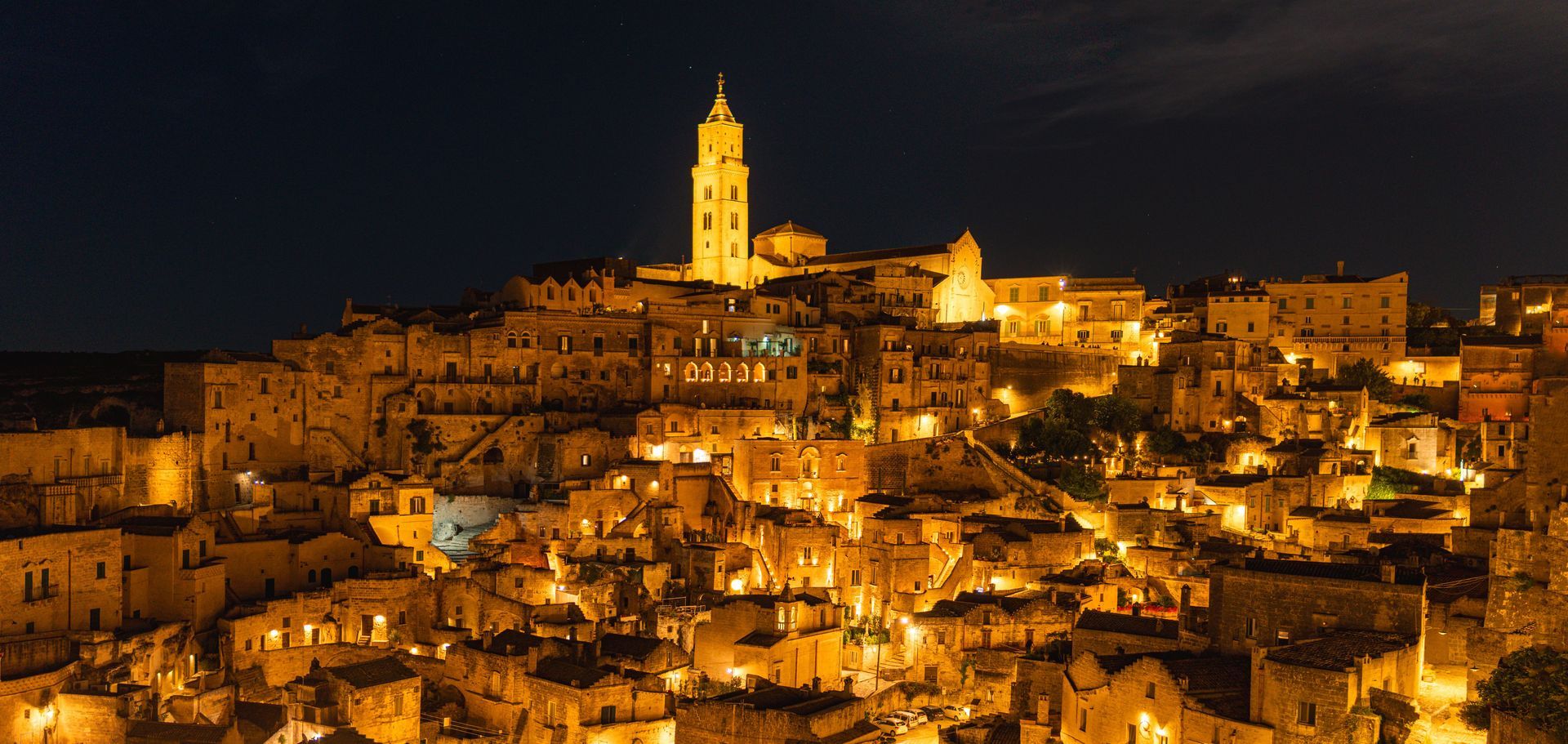
Matera is the only place in Italy where what you have come to look at was, within living memory, considered a national disgrace.
In 1952 the Italian state passed a law to empty it. Not to restore it, not to protect it to move everybody out. Around fifteen thousand people, roughly half the city's population, were relocated over the following years into new neighbourhoods on the plateau above. The Sassi were sealed and left. They stayed empty for the better part of thirty years.
Everything that makes the place extraordinary now follows from that. It is worth knowing before you arrive, because it changes what you are looking at.
What actually happened here
People had lived in these caves continuously since the Palaeolithic the settlement is, in UNESCO's phrase, the most intact troglodyte settlement in the Mediterranean. By the twentieth century that continuity had become overcrowding: families, livestock and no sanitation in the same excavated rooms, with the child mortality that follows.
Carlo Levi described it in Cristo si è fermato a Eboli, published in 1945, and the description reached Rome. The response was Law 619 of 17 May 1952, drafted by the Lucanian deputy Emilio Colombo at the request of prime minister Alcide De Gasperi: the risanamento of the Sassi. New quarters were built above by some of the best Italian architects of the period Ludovico Quaroni, Carlo Aymonino, Luigi Piccinato and the caves were abandoned.
The return began with a law of 1986, which allowed the Sassi to be restored and lived in again. UNESCO inscribed them in 1993. Matera was a European Capital of Culture in 2019.
So the city you walk through is not a preserved past. It is a place that was condemned, emptied, and then chosen again mostly by people who were not born there. That is a much stranger and more interesting thing.
Why that history changes the visit
Walk the Sassi and you are looking at three different things that appear identical from the outside.
Some of it is lived in ordinary flats behind ordinary doors, with people who would rather you did not photograph their washing. Some of it is hospitality: hotels, restaurants, guesthouses, in caves restored to a standard that did not exist here forty years ago. And a good deal of it is still empty, sealed, or half-restored and waiting.
Nothing on the street tells you which is which. A guide who grew up here does, and that single piece of context is the difference between an afternoon of photographs and understanding what you are standing in.
Sleeping in a cave, honestly
The cave hotels are the reason many people come, and they are genuinely remarkable. They are also not for everyone, and the brochures are quiet about why.
A cave room has no window, or a very small one. The stone holds a nearly constant temperature cool in August, which is a gift, and cool in February, which is less of one. Humidity is managed but present. There is often no view from inside the room, because the whole point of the room is that it is inside a rock. Sound behaves oddly: some rooms are silent as a tomb, others carry a conversation from two floors away.
People who love these rooms love them completely. People who need daylight when they wake up do not. It is worth saying which of the two you are before booking, and it is worth knowing that the best properties have both cave rooms and rooms with windows, which is often the right answer for a couple who disagree.
The rupestrian churches
The UNESCO site is not only the Sassi. It includes the Park of the Rupestrian Churches across the ravine, which holds more than a hundred and fifty churches cut into the rock, some with frescoes from the ninth century onwards.
The one that matters most is the Cripta del Peccato Originale the Crypt of Original Sin, often called the Sistine Chapel of rock churches. It sits outside the city, it can only be visited by advance booking, and the number of people inside at once is small. It is the single most common thing visitors discover they have missed on the morning they leave.
Across the gravina, the Murgia park gives you the view back at the city that appears in every photograph of Matera ever taken. Getting there involves either a short drive or a walk down into the ravine and up the other side, which is longer and hotter than it looks.
What Matera cannot be
Two things worth saying before you plan around them.
It is small, and it has a rush hour. Between about eleven and four the main routes through the Sassi fill with day visitors from the Puglian coast. The city is entirely different at seven in the morning and after eight at night, and those are the hours a stay here is really for.
It is made of stairs. The Sassi are a vertical city of steps, ramps and uneven stone, and there is no way to make that flat. For anyone with limited mobility, this needs planning rather than optimism: some routes work, many do not, and the choice of where you sleep matters more here than anywhere else in Italy.
When to come
April to early June, and late September to early November. These are the right months without qualification. Warm days, cold stone, long light on limestone that photographs like nothing else.
July and August. Basilicata in high summer is very hot and the Sassi are white rock with almost no shade. The caves stay cool, which helps, but the walking does not. If it has to be summer, it has to be early morning and evening.
Winter. Underrated and genuinely atmospheric fog in the ravine, very few visitors, and the churches to yourself. Cold, though, in a way that stone amplifies.
Getting there
Matera has no station on the national railway. A line from Ferrandina is under construction but not open, so in practice the arrival is by road.
Bari airport is about an hour away and is the sensible entry point, with good connections from London, Munich and Rome. Naples is around three hours by car, Rome closer to five. A driver matters here more than in most Italian cities, because the Sassi themselves are largely closed to traffic and the difference between being dropped at the right set of steps and the wrong one is twenty minutes of luggage on stone.
Planning it
How long. Two nights. One night gives you an afternoon and a morning, both of which fall inside the busy hours. The second night is what buys you the empty city.
What has to be booked ahead. The Crypt of Original Sin. The better cave hotels, which are small twenty rooms is a large property here. And a guide, because a good one in Matera is worth more than in almost any other Italian city, and there are perhaps a dozen.
What to wear. Shoes with grip. The limestone is polished by four hundred years of feet and it is genuinely slippery when wet.
Matera rewards the traveller who arrives knowing what happened here. Without that, it is a beautiful and slightly puzzling set of caves. With it, it is one of the few places in Europe where you can stand inside a decision the state made about how people should live, and see what happened when it was reversed.
Italy First Class accepts a limited number of requests each year. If Matera is on your list, tell us what you have in mind.
Related: How to Plan a Luxury Trip to Italy including why two bases beat three.
Common questions
Can you sleep in the Sassi of Matera?
Yes. A good part of the restored Sassi is now hospitality, and the cave hotels are the reason many people come. Be aware of what a cave room is: no window or a very small one, a constant cool temperature, some humidity, and no view from inside. Many of the best properties offer both cave rooms and rooms with windows, which is usually the right answer when travellers disagree.
Do I need to book the rupestrian churches in advance?
For the Crypt of Original Sin, yes it can only be visited by advance booking, it sits outside the city, and each group is small. It is the thing visitors most often discover they have missed. The other rock churches vary; several open on limited schedules.
How long do I need in Matera?
Two nights. Between roughly eleven and four the Sassi fill with day visitors from the Puglian coast; the city is a different place at seven in the morning and after eight at night. One night puts you there only during the busy hours.
Is Matera suitable for someone with limited mobility?
It needs planning rather than optimism. The Sassi are a vertical city of steps, ramps and uneven polished stone, and much of it cannot be made level. Some routes work and many do not, so the choice of where you sleep matters more here than in almost any other Italian city.