

Cinque Terre: The Path That Took Twelve Years to Reopen
Cinque Terre: The Path That Took Twelve Years to Reopen
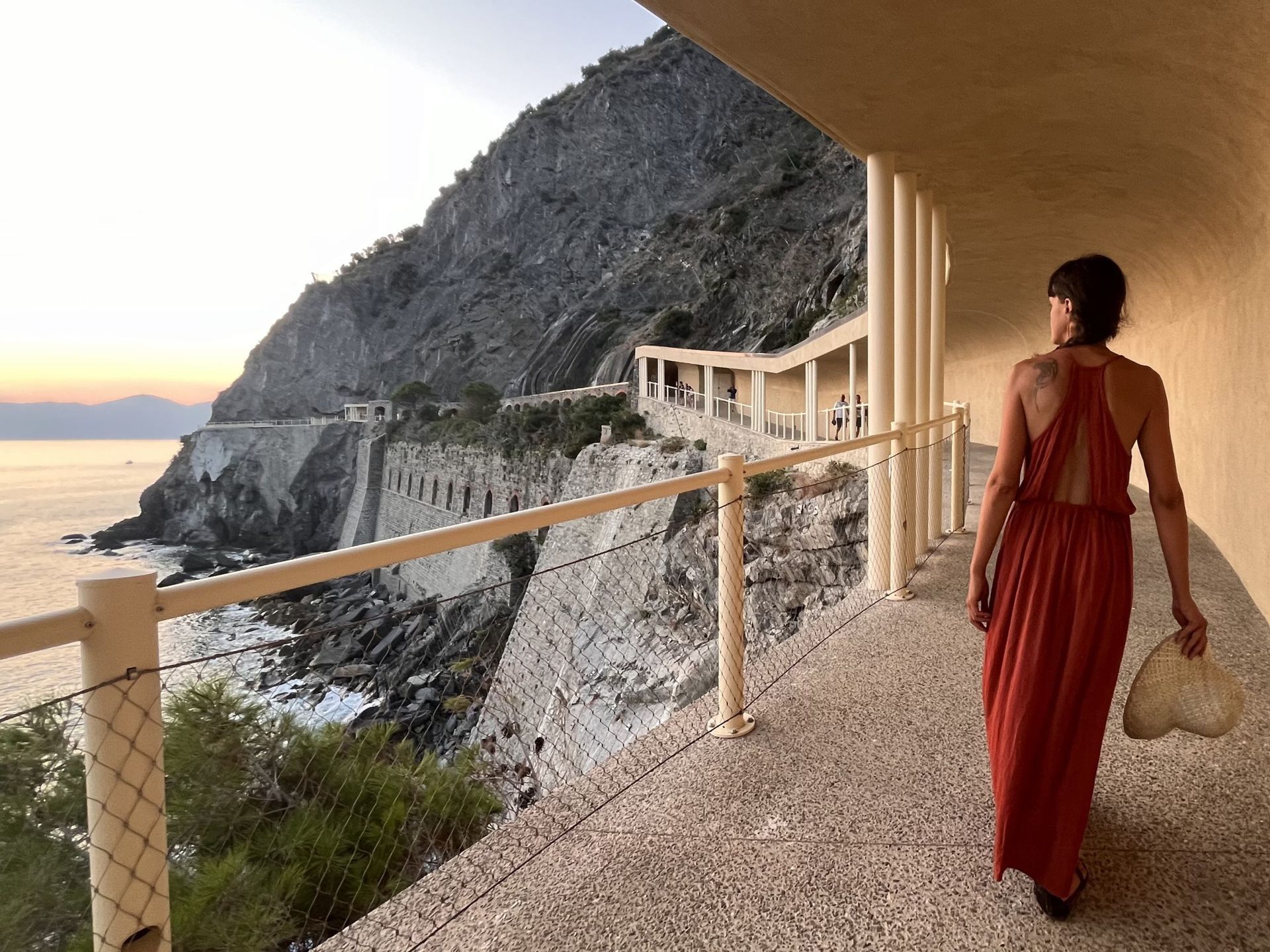
For twelve years, the most photographed footpath in Italy did not exist for visitors. A landslide took it in 2012, and the Via dell'Amore the cliffside walk between Riomaggiore and Manarola that gave the Cinque Terre much of its romantic reputation simply was not there to walk.
It reopened for good in 2024, after a reconstruction that cost more than twenty-three million euros. What came back is not quite what closed. The free, wander-on stroll of postcards is now a ticketed, one-directional, capacity-controlled route. That change tells you more about how to visit the Cinque Terre today than almost anything else about the place.
It is worth understanding before arriving, because the path is no longer something you simply find.
What actually happened to it
The Via dell'Amore ran along a stretch of cliff that was never entirely stable. In 2012 a landslide closed it outright. It stayed closed for twelve years long enough that an entire cohort of visitors came to the Cinque Terre, walked Vernazza and Manarola, and never once had the option of the path most of their friends' photographs had promised them.
Reconstruction began in January 2022. The first 160 metres, from the Riomaggiore end, reopened in July 2023. The full route was not handed back until 27 July 2024. The final bill ran past twenty-three million euros for a walkway that takes most people twenty minutes to cross.
None of that is incidental. It is the reason the path now works entirely differently from how it worked before 2012, and the reason it is worth knowing the new rules rather than assuming the old ones.
What it takes to walk it now
Access runs one way only, from Riomaggiore towards Manarola. You need a Cinque Terre Card the Trekking version if you are on foot for the day, the Treno version if you also want the regional trains between villages rather than a standalone ticket at the gate. In the 2026 high season, from 29 March to 24 October, the path is open 9am to 9pm; through the winter, 9am to 6pm.
If the path is closed for weather or maintenance on the day you planned for it, the free alternative is the Via Beccara, a roughly hour-long inland route between the same two villages. It is not the same walk. It is the reason to build in a spare morning rather than pinning the whole visit to one path on one day.
Why there was never really a road anyway
It is easy to assume the Via dell'Amore's closure simply removed one option among several for getting between villages. It removed one of exactly three. There is no coastal road connecting the five villages of the Cinque Terre to each other not a narrow one, not a restricted one, none at all. You move between them on foot, by the branch-line train that tunnels through the headlands, or by boat in season. That is the whole list.
Each village does have a road to the outside world, but not to each other: Riomaggiore, Manarola and Monterosso are reachable by car from inland routes off the A12 motorway, while Corniglia and Vernazza sit at the end of longer, winding mountain roads that were never built for casual use. None of these roads run along the coast. They arrive from behind the villages, over the ridge, because the terrain in front of them is cliff.
That absence of a coastal road is not an oversight. It is the reason the five villages still look the way they do.
Beyond the five names everyone knows
Corniglia is the one village that is not, in the ordinary sense, on the sea. It sits on a promontory above the water, reached from the train station by the Scalinata Lardarina a switchback staircase of some 380 steps in thirty-three flights or by a shuttle bus that is free with the Cinque Terre Card and reliably crowded. The seasonal boats that call at the other four villages skip it entirely, for the same reason: there is nowhere at sea level to land. It has the smallest number of day visitors of the five as a result.
The terraces above all five villages tell their own quieter story of retreat. Land under cultivation here has fallen from roughly 3,500 acres in 1951 to around 275 today, as the labour of maintaining a dry-stone wall by hand has simply outpaced what the vineyards can pay back. What remains produces Sciacchetrà, a passito made by drying Bosco, Albarola and Vermentino grapes before pressing a wine that exists, in commercial terms, only because a shrinking number of people still choose to do this by hand.
The Cinque Terre's UNESCO inscription, dated 1997, in fact covers more than the five villages: it extends south to Portovenere and the islands of Palmaria, Tino and Tinetto, a quieter continuation of the same coastline that most itineraries never reach.
What this coast cannot be
Two things worth knowing before they reshape a plan made without them.
It is not a driving destination. There is nowhere to arrive by car except the edges, and nothing to do with a car once you are there. A stay here works around trains, boats and walking, in that order, and a rental car is, if anything, a liability to park.
It is not spontaneous anymore, at least not on the one path everyone wants. The Via dell'Amore's ticketing exists because unrestricted crowds were part of what put the cliff at risk in the first place. Deciding at breakfast to walk it that afternoon is no longer a safe assumption the capacity limits are the whole point of the system, and they bind visitors exactly as intended.
When to come
Late April to June, and September into early October, avoid the worst of both the July–August crowds and the narrower winter hours. The villages are compact enough that high summer pushes both the trails and the train platforms past comfortable, particularly around midday.
Getting there, and around
La Spezia and Levanto are the two rail gateways, both reachable from Genoa, Pisa or Florence with a change; from there, the local Cinque Terre line covers the five villages in under twenty minutes end to end. Seasonal boats (28 March to 1 November in 2026) run between La Spezia, Portovenere and four of the five villages Corniglia has no landing weather permitting, and are the only way to see the coastline from the water without a private charter.
The practical shape of a visit is almost always: one base, two or three nights, trains and boats to move, and a route through the Via dell'Amore planned for a specific morning rather than assumed as always available.
Italy First Class accepts a limited number of requests each year. If the Cinque Terre is on your list, tell us what you have in mind.
Related: The Amalfi Coast: A Road That Bans Half Its Traffic by Law a different coast, a different way of rationing the same problem.
Common questions
Is the Via dell'Amore open in 2026?
Yes. It reopened fully in July 2024 after a twelve-year closure and a reconstruction costing more than twenty-three million euros. Access now runs one way only, from Riomaggiore to Manarola, and requires a Cinque Terre Card rather than a standalone ticket. High-season hours (29 March–24 October 2026) are 9am to 9pm.
Do you need a car in the Cinque Terre?
No, and it is a genuine liability if you bring one. No coastal road connects the five villages movement between them is by train, boat, or on foot only. Each village has its own road access to the outside world, but none of those roads run along the coast or link the villages to each other.
What happens if the Via dell'Amore is closed on the day I planned?
The free alternative is the Via Beccara, an inland route of about an hour between Riomaggiore and Manarola. It is a different walk, not a substitute experience, which is why it is worth having a flexible morning rather than a single fixed plan around the path.
Which Cinque Terre village is least crowded?
Corniglia, generally. It is the only village not directly on the water reached by a roughly 380 steps staircase or a shuttle bus from the train station and that extra effort keeps day-tripper numbers noticeably lower than in Vernazza or Manarola.