

Motor Valley: Cars and Food a perfect match
Motor Valley: Cars and Food a perfect match

Maranello, where Ferrari builds its cars, is eighteen kilometres from Modena. Sant'Agata Bolognese, where Lamborghini has built its own since 1963, is twenty-seven kilometres away in the other direction. San Cesario sul Panaro, where Pagani builds far fewer cars than either, is twelve. None of this proximity was planned. It is simply how close together Emilia-Romagna keeps the things it is good at.
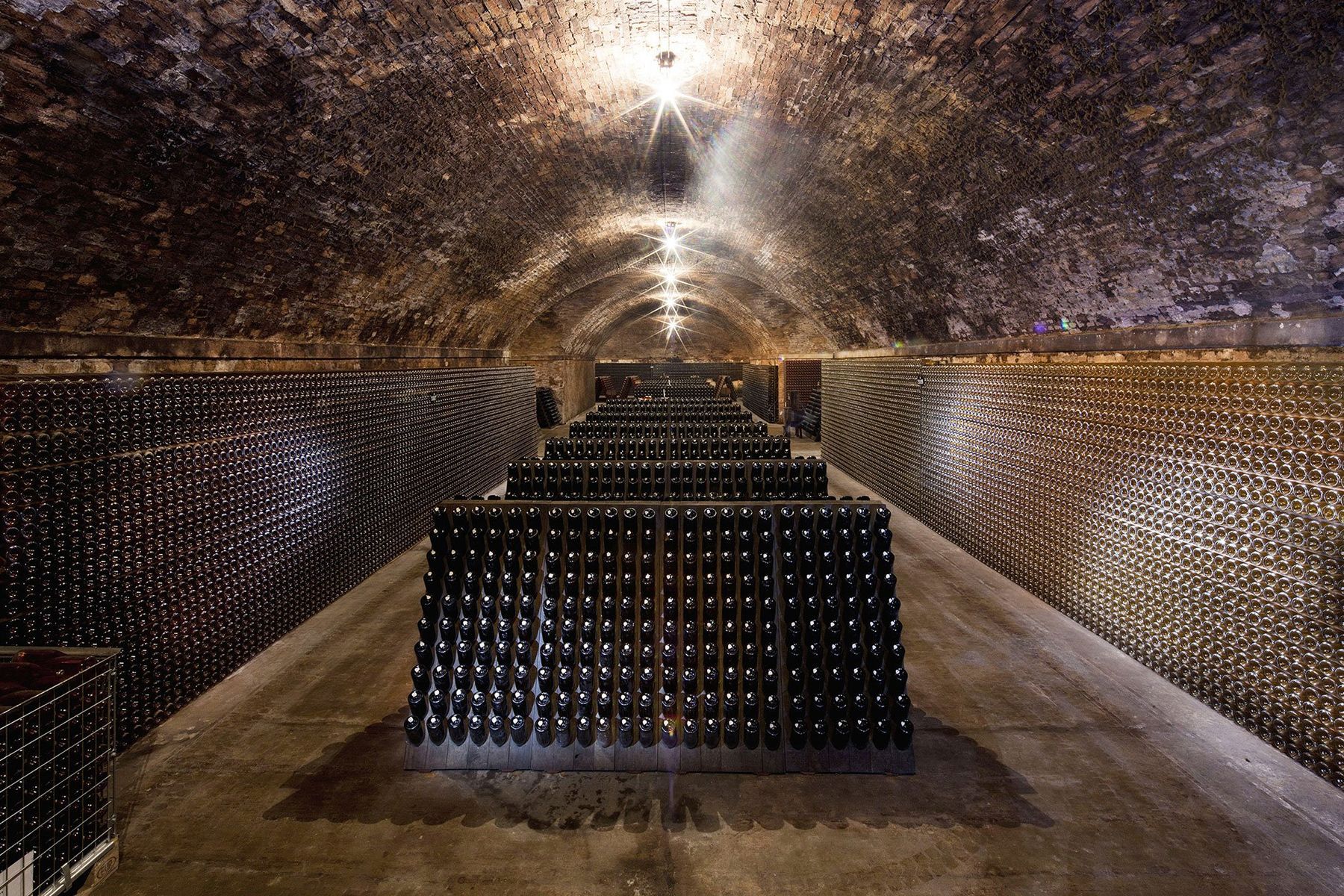
The same short radius holds the fields where Parmigiano Reggiano ages for a legal minimum of twelve months, and the cellars where a vinegar needs twelve years in wood before a producer may call it Aceto Balsamico Tradizionale. The region had a name for the food side before any outsider thought to connect it to the cars: UNESCO used the phrase itself in 2015, naming Parma a Creative City of Gastronomy and calling it the gastronomic centre of Italy's Food Valley. The other name, Motor Valley, is older still.
Clients who come to Modena for a car they have wanted since childhood tend to leave a few hours later with a dinner reservation they had not planned for. That pairing is not a sales angle. It is what is actually here.
The valley's six names
Modena alone accounts for two of them. Maserati was founded in Bologna in 1914 by five Maserati brothers, its trident borrowed from Neptune's fountain in Piazza Maggiore; the Orsi family bought the company in 1937 and moved it to Modena in 1940, where it is still built today. Ferrari came slightly later and never left: Enzo Ferrari was born in Modena in 1898 and founded his own company in nearby Maranello in 1947.
Lamborghini's version of events, in Sant'Agata Bolognese, is harder to pin down than the marketing suggests. Ferruccio Lamborghini, whose fortune came from tractors, is supposed to have complained to Enzo Ferrari in person about a faulty clutch and been told, in effect, to mind his tractors the insult that made him build a rival company in 1963. Even the automotive historians who have looked closely at the story call it unconfirmed. What is certain is that the tractor fortune was real, and so was the company it built.
Ducati, in Bologna itself, did not start as a car or motorcycle maker at all. Antonio Cavalieri Ducati and his three sons founded it in 1926 to manufacture radio components condensers, vacuum tubes riding the wave of Guglielmo Marconi's own fame in the city. Motorcycles came only in 1950, built around a small engine called the Cucciolo that the company had first designed to sell to somebody else.
Two who chose to stay small
Horacio Pagani spent eight years at Lamborghini, from 1983, before leaving to build cars under his own name in San Cesario sul Panaro, in a workshop he still calls the Atelier. The first Zonda appeared in 1999; the Huayra followed in 2011. Production, by design, stays a fraction of what the bigger marques manage.
Giampaolo Dallara's résumé runs through Ferrari, Maserati, Lamborghini and De Tomaso before he started his own company west of Modena, in Varano de' Melegari, in 1972. Dallara is not a household name in the way the others are, which is its own kind of statement: it is the sole chassis manufacturer for the IndyCar Series and builds the chassis Haas races in Formula One, work that carries no badge on the outside. Its base includes what the company insists on calling an exhibition ramp rather than a museum, and, for clients who arrange it beforehand, a racing simulator built around an actual carbon-fibre chassis.
The one that left
Bugatti has an Emilia-Romagna chapter too, though the marque itself would rather you visited Molsheim. Between 1990 and 1995, a revived Bugatti built the EB110 its first modern supercar in a purpose-built factory at Campogalliano, a few minutes from Modena, opened on what would have been Ettore Bugatti's 109th birthday. Roughly 128 cars left the building about ninety-six coupés and thirty-two open Super Sports before the company collapsed in 1995. The factory still stands, kept going informally by the family that has looked after it since it opened. Bugatti's own position, on the record, is that its home is Molsheim and Campogalliano is not something the company is considering. It is the valley's one honestly closed chapter, worth knowing rather than skipping past.
What you can actually see
The Enzo Ferrari Museum in Modena wraps a bright yellow, bonnet-shaped aluminium roof 3,300 square metres of it, the same yellow as the shield behind Ferrari's black horse around the actual house where Enzo Ferrari was born in 1898. Up to twenty-one cars fill the underground hall beneath it. In Maranello, the separate Ferrari Museum sits beside the factory itself; what the public sees there is the museum and a shuttle tour past the grounds, not a walk onto the production line.
Once a year, in the last week of May, Motor Valley Fest turns central Modena into something closer to an open street show than a trade event. A joint display called Best of Motor Valley puts Ferrari, Maserati, Lamborghini, Ducati, Pagani and Dallara side by side, alongside a concours d'élégance now in its twenty-sixth year. It is the one week the whole valley is genuinely, publicly on show at once.
The other valley
Parma, less than an hour from Modena, became a UNESCO Creative City of Gastronomy in 2015 for reasons the city did not have to exaggerate: close to a third of its workforce works in food, and it has hosted the European Food Safety Authority since 2002. The same stretch of countryside produces Parmigiano Reggiano, aged a legal minimum of twelve months and often much longer, and two cured hams worth telling apart. Prosciutto di Parma is made from the whole leg, across a wide hillside zone; Culatello di Zibello is made from a single, smaller muscle, inside just seven villages along the Po, aged a minimum of ten months through the winter fog that settles over this stretch of the valley.
Bologna, meanwhile, still owns the most exact recipe of the four. Tagliatelle al ragù was deposited with the city's Camera di Commercio in 1972 by the Accademia Italiana della Cucina, Italy's culinary academy, down to a legal noodle width: eight millimetres cooked, fixed at exactly 1/12,270 of the height of the Torre degli Asinelli, Bologna's tallest tower. A golden tagliatella of the correct width sits on permanent display there, in case of dispute. Twenty minutes from that tower (30km), Massimo Bottura's Osteria Francescana has held three Michelin stars since 2011 and was named Italy's best restaurant again in 2026 proof the valley's precision runs to plates as much as to pistons.
What this valley cannot promise
Two things worth knowing before they reshape a plan built without them.
Factory floors are mostly not open. Ferrari, Lamborghini and Pagani all build for clients booked years out, and none of the three treats its production line as something to walk through. What is open is the museums, and, at Ferrari, a shuttle past the grounds a different thing entirely. Dallara is the exception, and only by arrangement.
Most balsamic vinegar sold in Modena is not the twelve-year kind. What is usually sold as Balsamic Vinegar of Modena carries the IGP label, legally allowed at sixty days old and blended with ordinary wine vinegar a perfectly good product, but not the one the region is actually known for. The true Aceto Balsamico Tradizionale is tasted by the drop, generally at the acetaia that made it, not bought by the bottle on the way to the airport.
When to come
Late May, if Motor Valley Fest itself is part of the plan the one week Ferrari, Lamborghini, Ducati, Maserati, Pagani and Dallara are formally on display together. Outside that window, spring and early autumn avoid the Po Valley's heaviest summer humidity, which builds through July and settles in for August.
Getting there
Bologna's Guglielmo Marconi airport is the region's real gateway: about fifty kilometres and forty minutes by the A1 to Maranello, with Modena itself closer still, around eighteen kilometres and twenty minutes away. Everything described here sits inside that same short radius Modena, as it happens, is also where Italy First Class keeps its own office.
Italy First Class accepts a limited number of requests each year.
If Motor Valley or the table around it is on your list,
tell us what you have in mind.
Related: White Truffle Season in the Langhe: The Private Version proof that precision and rarity are not only found under a bonnet.
Common questions
Can you tour the Ferrari, Lamborghini or Pagani factories?
Only partly, and it depends on the marque. Ferrari's Maranello site offers a shuttle tour past the grounds and two museums open to everyone, not a walk onto the production line; Lamborghini and Pagani build for clients booked years out and are not set up for casual visits. Dallara, in Varano de' Melegari, is the exception its exhibition space and racing simulator are open by arrangement.
What is Motor Valley?
A non-profit association based in Bologna that unites Emilia-Romagna's car and motorcycle makers, racetracks, museums and universities under one regional identity. Its members include Ferrari, Lamborghini, Maserati, Ducati, Pagani and Dallara, and it runs the annual Motor Valley Fest each May in Modena.
Is the balsamic vinegar sold in most shops the same as the traditional twelve-year kind?
No. What is usually sold as Balsamic Vinegar of Modena carries the IGP label, legally allowed at sixty days old and blended with ordinary wine vinegar. The Aceto Balsamico Tradizionale DOP, aged a minimum of twelve years in a succession of wooden barrels, is a different and far smaller product, usually tasted by the drop at the acetaia that made it rather than bought by the bottle.
When is the best time to visit Motor Valley?
Late May, if Motor Valley Fest itself is part of the plan — the one week Ferrari, Lamborghini, Ducati, Maserati, Pagani and Dallara are formally on display together in Modena. Outside that window, spring and early autumn avoid the Po Valley's heaviest summer humidity.