

The Amalfi Coast: A Road That Bans Half Its Traffic
The Amalfi Coast: A Road That Bans Half Its Traffic
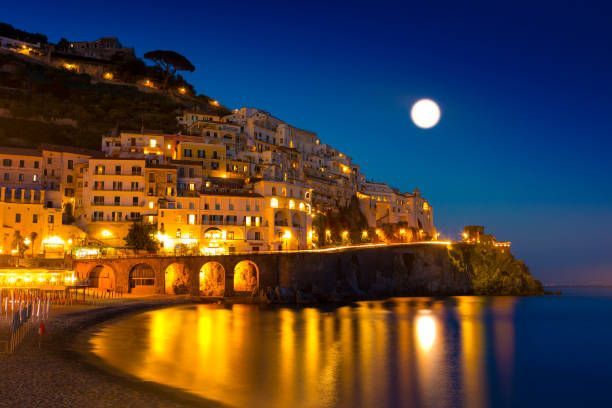
On the Amalfi Coast, whether your car is allowed on the road today can depend on the last digit of your number plate.
From August through September, and on weekends and holidays the rest of the season, the SS163 the single road connecting every town from Sorrento to Amalfi applies an odd-even licence plate restriction between 10am and 6pm. Get the day wrong in a self-driven rental and you are, technically, breaking the law.
It sounds like a bureaucratic curiosity. It is actually the most useful thing to understand before planning a visit, because of who the rule exempts.
The exemption that matters
Taxis and chauffeur-driven cars are not subject to the restriction. Nor are residents, disabled permit holders, emergency vehicles, or two-wheelers. Hotel guests with a booking can generally still reach their hotel. What cannot reliably move through restricted hours is a self-driven rental car with the wrong plate ending on the wrong day.
This is not a workaround IFC invented to sell chauffeured transfers it is the actual shape of the regulation, published annually by ANAS, the state road authority, and enforced with number-plate cameras along the route. A private driver is not an upgrade here so much as the difference between a schedule that holds and one that does not.
The same rule also switches on for Easter week and the late-April holiday bridge, both well outside what most people think of as the coast's season. A trip booked around a long spring weekend is exactly the kind of plan the restriction can quietly unravel.
Why the road works this way
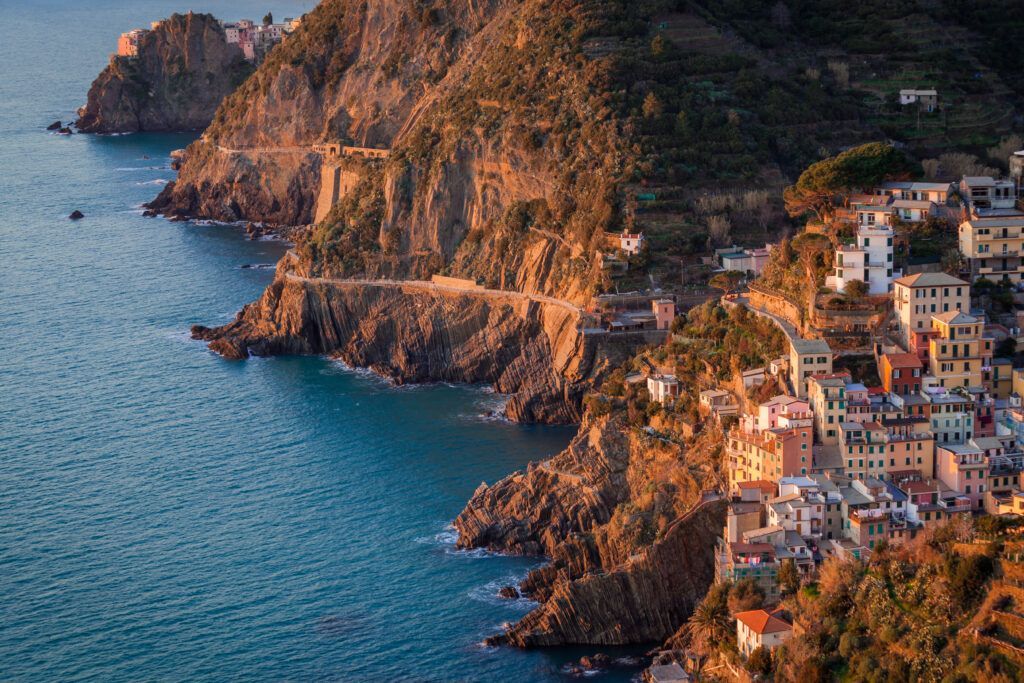
The SS163 was never built for this. Construction began in the 1830s under Bourbon rule, and the stretch past Amalfi opened in 1852 carved, not laid, into a cliff face that drops straight into the sea. The full route through to Sorrento was not finished until the early 1890s, nearly sixty years after work began: just over fifty kilometres of two-lane road, much of it with rock on one side and open air on the other, built for a fraction of the traffic it now carries in August.
The alternating plate system is ANAS's response to a road that cannot be widened. It runs through a UNESCO World Heritage cultural landscape, inscribed in 1997, hemmed by protected cliffs on one side and terraced towns on the other. There is nowhere to add a lane. Rationing which cars use it at peak hours is, bluntly, the only lever available.
Beyond Positano, Amalfi and Ravello
The three names most people arrive already knowing sit twenty minutes apart by car, which is exactly why they are the most congested twenty minutes on the coast. A few worthwhile things sit just off that line.
Furore is a fjord, not a town in the usual sense a narrow cleft in the cliff with a beach at the bottom and, thirty metres above it, a single arch bridge that has hosted a stage of the world championship of high diving most summers. Most cars cross it without slowing down; almost nobody stops.
Atrani, one of the smallest towns in Italy at just 0.12 square kilometres and roughly 830 residents, is a five-minute walk from Amalfi and sees a fraction of its visitors, because the coast road bypasses its centre entirely.
Scala, reached by a short climb above Ravello, is generally reckoned the oldest settlement on this stretch of coast quieter than the town it looks down on, and largely unvisited by anyone not staying there.
Li Galli, the small island group visible from Positano's beaches, is the Sirenuse of Greek myth the sirens' islands, recorded as such by the geographer Strabo in the first century BC. Their modern owners have matched the reputation: the choreographer Léonide Massine developed them earlier in the twentieth century, and Rudolf Nureyev bought them in 1988, spending his final years there. They remain privately owned and are best seen from the water.
Why September works
The Ravello Festival 2026 is its 74th edition runs concerts on the belvedere of Villa Rufolo, the terrace where Wagner is said to have found the garden of Klingsor for Parsifal, from early July into the first days of September most years. Catch the tail end of it and you get live orchestral music in a setting built for exactly that, without August's crowds.
That is the other half of the September case. The plate restriction on the SS163 runs daily through 30 September regardless — it does not relax. But the volume of day-trip traffic on the road falls away noticeably once the Italian summer holidays end in early September. The rule stays. The road under it empties.
What this coast cannot be
Two things worth knowing before they surprise anyone.
It is not spontaneous. A road that bans half its private traffic by the clock and by number plate is not a place for deciding at breakfast to drive to Ravello for lunch. A table, a driver, a boat, a room with a view rather than a wall all of it has to be arranged ahead, because everyone else on the coast is trying to arrange the same thing on the same few good days.
It is not one coastline. Positano, Amalfi and Ravello sit at three different altitudes and have three different characters, and in high season, three different traffic problems. Treating them as a single day trip from any one of them usually means spending more time in a car or a queue than anywhere worth photographing.
Getting there, and around
Naples is the working airport, around ninety minutes by road from Sorrento or Amalfi depending on the point and the traffic. The Circumvesuviana train reaches Sorrento directly from Naples, which is useful as far as it goes but Sorrento is still the wrong end of the SS163 for Positano, Amalfi or Ravello, and the train solves none of the road beyond it. Seasonal passenger ferries run from Naples and Salerno to Amalfi, Positano and Sorrento instead, and are frequently the faster option in daylight hours precisely because they do not touch the SS163 at all.
For the road itself, the calculation is simple: a licensed driver removes the plate restriction, the parking problem, and the question of whether today is an odd day or an even one. On a coast with one road in and out, that is not a small thing to remove.
Italy First Class accepts a limited number of requests each year.
If the Amalfi Coast is on your list,
tell us what you have in mind.
Related: How to Plan a Luxury Trip to Italy including why two bases beat three.
Common questions
Can I drive myself on the Amalfi Coast?
Yes, but between 10am and 6pm daily from 1 August to 30 September, and on weekends and holidays the rest of the season from June to October the SS163 applies an alternating odd-even licence plate restriction. Taxis, chauffeur-driven cars, residents and two-wheelers are exempt; a self-driven rental is not, so the wrong day can mean the wrong plate.
What is the best time to visit the Amalfi Coast?
Late May to June, and September into early October, balance warm weather against the crowds and traffic of July and August. September has the added advantage of the Ravello Festival typically running into its first days, with noticeably lighter day-trip traffic once the Italian summer holidays end.
How do I get around without driving myself?
A private driver removes the plate restriction entirely and is the most reliable way to keep to a schedule of restaurant bookings and boat departures. Seasonal ferries between Naples, Salerno, Positano, Amalfi and Sorrento are a genuine alternative for point-to-point journeys and avoid the coast road altogether.
Is the Amalfi Coast suitable for a single day trip?
Not comfortably. Positano, Amalfi and Ravello sit at different heights and have different characters along one congested road; fitting all three into one day usually means more time in traffic than at any of them. Two or three nights based in one town, with excursions by boat or driver, works far better.