

Sustainable Travel: What's Actually Certified, and What Isn't
Sustainable Travel:
What's Actually Certified, and What Isn't

The United Nations World Tourism Organization defines sustainable tourism as travel that "takes full account of its current and future economic, social and environmental impacts, addressing the needs of visitors, the industry, the environment and host communities." Three dimensions, one official sentence and nearly every luxury travel brand alive today claims to meet it. Few say which of the three they mean, or who would check.
That gap, between a technical definition and a word used mostly as a mood, is where this article stays. Some of what follows is independently audited. Some of it is a marketing category with no enforcement behind it at all. Italy First Class draws that line for clients who ask, because the honest answer is rarely as tidy as a brochure makes it sound.
Who actually checks
The Global Sustainable Tourism Council is the closest thing the industry has to a referee, and it does not certify a single hotel or destination itself. GSTC accredits the bodies that do separate criteria sets for destinations and for hotels and tour operators against four fixed themes: sustainable management, socioeconomic benefits for host communities, protection of cultural heritage, and reduction of environmental impact. A property is measured against all four together, not whichever one photographs best.
Most hotels that describe themselves as sustainable hold no independent certification of any kind. Nothing stops the word from being used freely unlike a protected place name on a food label, "sustainable" carries no legal definition that a court or a regulator would enforce.
What a real village hotel looks like
In 1982, hotel consultant Giancarlo Dall'Ara proposed a way to house guests in villages emptied by earthquake and migration without building anything new: scatter the rooms across a handful of existing houses within a short walk of each other, run them under one reception and one management, and call the whole arrangement a single hotel. He developed the idea first around Carnia, in Friuli, in the aftermath of the 1976 earthquake there, and gave it a name albergo diffuso, the scattered hotel.
Corippo, a granite hamlet in Switzerland's Ticino canton, shows what that can do at the extreme end. Its population fell from close to 300 in 1850 to nine residents by the end of 2019, the lowest count of any village in the country. Its albergo diffuso, built entirely inside the village's existing stone houses, opened in 2022. The small staff who arrived to run it lifted the population by roughly a third and included the first child to live in Corippo in fifty years.
Corte Fiorita, on the Amalfi Coast in Santa Maria di Castellabate, became Italy's first certified albergo diffuso in 2002, and the model has spread from there. It has not spread as far as the marketing around it suggests. Roughly 150 properties worldwide currently hold genuine certification from the model's own governing association, against a far longer list that borrows the name, or the aesthetic of scattered stone rooms, without meeting Dall'Ara's actual conditions: existing buildings only, one management, and rooms that stay part of the village rather than fenced off from it.
Where Italy already manages the crowd
Venice has run a day-tripper access fee, the Contributo di Accesso, since 2024, charging visitors who are not staying overnight €5 per person if booked at least four days ahead, rising to €10 within three days of the visit. In 2026 the fee applied across sixty selected days between 3 April and 26 July, from 8:30 in the morning to 4 in the afternoon, concentrated on the weekends and holidays when day arrivals run highest. The city states its purpose plainly: manage crowding on the highest-traffic days, and put some of the proceeds toward maintaining a city that a day visitor's ticket otherwise does nothing to fund.
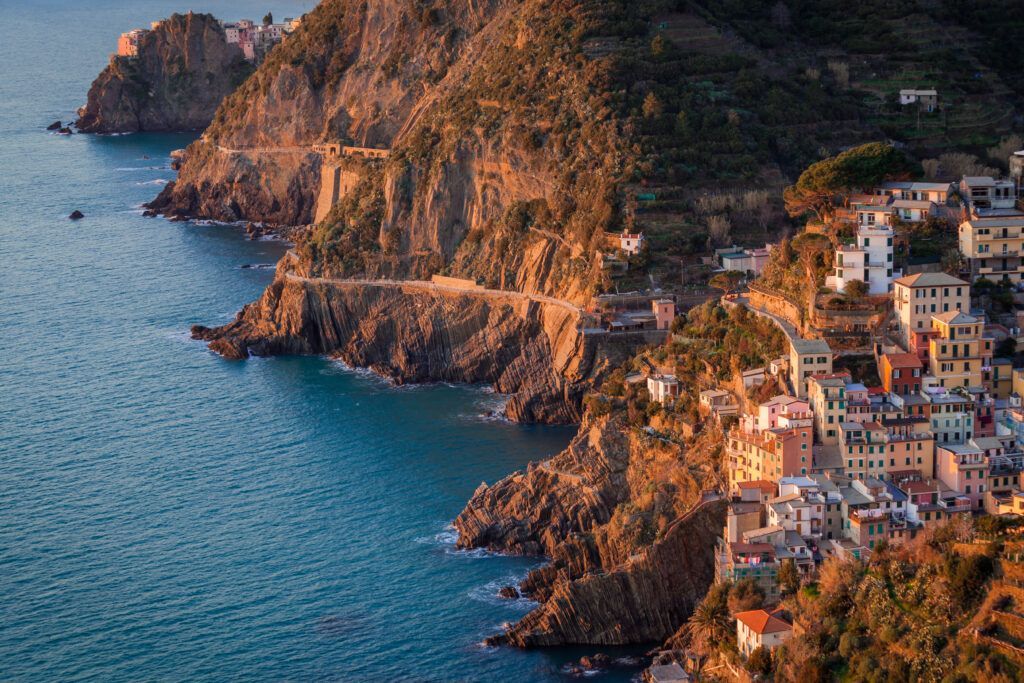
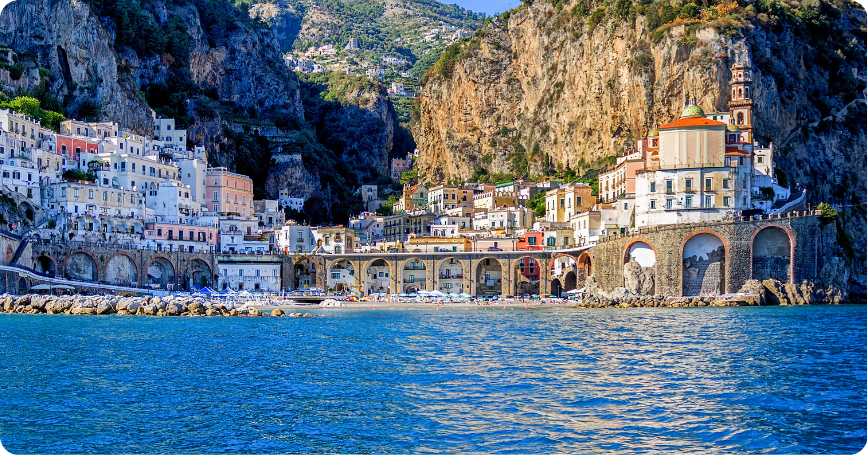
The same instinct runs through two other routes Italy First Class has already covered. The Amalfi Coast's single coastal road now restricts access by license plate to keep a UNESCO-listed shoreline moving under a volume of cars it was never built for. The Via dell'Amore, the cliffside path linking two of the Cinque Terre's villages, reopened only after twelve years of repair work with a capped daily number of visitors the same logic as Venice's fee, applied to footsteps instead of euros.
What luxury travel does not solve on its own
Private aviation is the honest difficulty in any conversation about luxury and sustainability, and it does not resolve itself with better language. Transport & Environment, the Brussels research group that tracks European aviation emissions, puts private jets at five to fourteen times more polluting per passenger than commercial flights, and fifty times more polluting than rail. Clients who fly privately already know this, generally, in outline. What is less often said is that carbon offsetting does not close the gap. A 2023 investigation into Verra, the largest certifier of forest-protection carbon credits, found that more than 90 percent of the credits examined were what researchers called phantom credits tied to forest that was never actually at risk of being cut down, sold for a reduction that would have happened anyway. The flaw has a name in the field: the additionality problem. Greenpeace has rejected offsetting outright rather than endorse a weaker version of it, and even the industry's own accreditation body has acknowledged how much confusion the market has created about what a credit actually guarantees.
Italy First Class does not sell offsets as an answer to this, because they are not one. What actually narrows the gap is plainer and less marketable: fewer, longer trips instead of frequent short ones; ground transfers between Italian cities that comfortably manage the distance without a plane; and travel dates chosen off the days when a destination is already at its limit, rather than the ones that force it past that limit.
The Italian answer that came before the phrase existed
Slow Food began in Rome in March 1986, when a fast-food restaurant opened at the foot of the Spanish Steps and a group of food writers led by Carlo Petrini decided the city's own cooking was worth defending on principle, not just on taste. The organization built that instinct into structure over the following decades: the Ark of Taste, catalogued from 1996, records foods at risk of disappearing a cheese, a bean variety, a cured meat made in only a handful of villages; the Presidia program, started in 1999, works directly with the small producers keeping those foods alive, on terms meant to keep the work economically viable rather than merely nostalgic. "Good, clean and fair," the phrase the movement adopted in 2006, was arguing for something close to the UNWTO's three dimensions two decades before that definition existed, using ingredients instead of statistics to make the case.
What this actually changes about a trip
None of the above is a checklist a client needs to memorize. It changes a small number of concrete decisions on Italy First Class's side of the planning. Genuine alberghi diffusi and other small, locally owned properties get chosen over branded resort chains where both exist, not as a gesture but because the money involved tends to stay closer to the place that earned it. Longer stays in fewer places get proposed over a rotation of one-night stops, both because it suits how these small properties actually run and because it is the single biggest lever a trip has over its own footprint. And where a property or an experience claims a certification, Italy First Class checks it before it goes into an itinerary, rather than repeating the claim on faith.
That last part is the one this article cannot outsource to a sentence. A "sustainable" label on a hotel's own website means nothing on its own. Ask what body issued it, and what it actually measured.
Italy First Class accepts a limited number of requests each year. If a trip built around these questions not just where to go, but how the going affects the place is what you're after, tell us what you have in mind.
Related: White Truffle Season in the Langhe: The Private Version another case of a name worth checking before it is trusted.
Common questions
What does "sustainable tourism" actually mean?
By the UN World Tourism Organization's own definition, travel that fully accounts for its economic, social and environmental impact, and addresses the needs of visitors, the industry, the environment and host communities together not any one of those in isolation.
Does the Global Sustainable Tourism Council certify hotels and destinations directly?
No. GSTC accredits the certification bodies that assess hotels, tour operators and destinations against its four core criteria. Most properties that market themselves as sustainable hold no certification linked to GSTC or any comparable body at all.
Is every albergo diffuso genuinely sustainable?
Only the ones that meet the model's actual conditions existing buildings, one management, rooms kept within the working village rather than a separate compound and hold certification from the model's governing association. Roughly 150 properties worldwide currently do. Many more use the name or the look without meeting the criteria behind it.
Is private aviation compatible with sustainable travel?
Not by the numbers, and Italy First Class does not claim otherwise. Research group Transport & Environment puts private jets at five to fourteen times more polluting per passenger than commercial flights. Carbon offsetting is often offered as the fix; independent investigations into the offset market have found it far less reliable than the marketing around it suggests.